
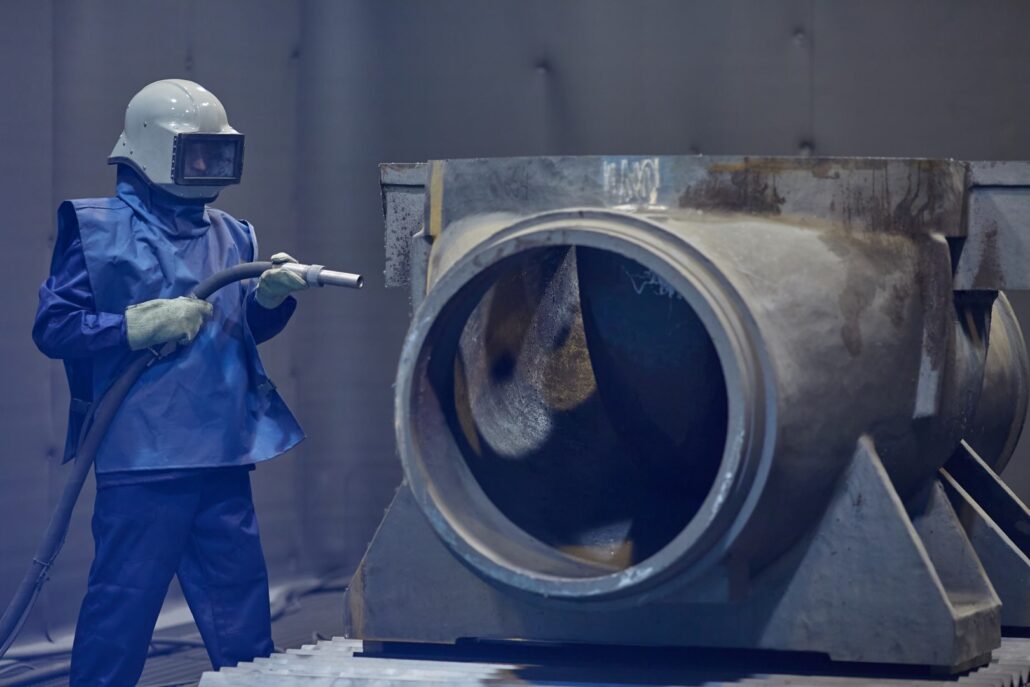
Metal surfaces are built to last, yet over time they face corrosion, rust, and layers of failing paint. These issues weaken structural integrity and reduce the effectiveness of protective coatings. This is why sandblasting plays such an essential role in metal restoration. At Macs Coatings, sandblasting is a critical first step in ensuring metal surfaces are properly prepared for long-lasting finishes.
Rather than serving as a simple cleaning method, sandblasting creates the ideal foundation for advanced coating systems. By thoroughly removing rust, corrosion, and old paint, sandblasting allows coatings to bond directly to clean metal. As a result, the finished surface becomes stronger, more durable, and far more resistant to environmental damage.
What Sandblasting Actually Does
Sandblasting, also known as abrasive blasting, uses compressed air to propel abrasive media against a metal surface. This high-impact process strips away rust, paint, scale, oils, and other contaminants that manual or chemical cleaning methods often miss.
Because sandblasting reaches into crevices, pits, and recessed areas, it ensures no hidden contaminants remain. Once these materials are removed, the bare metal underneath is exposed. This creates a fresh starting point that is essential for coatings to perform properly. Without sandblasting, coatings can fail prematurely due to trapped debris beneath the surface.
Creating the Proper Surface Profile
In addition to removing contaminants, sandblasting creates a surface profile. This profile is a microscopic texture that allows coatings to grip the metal more effectively. A surface that is too smooth may look clean, but it does not provide enough traction for coatings to adhere securely.
The controlled roughness produced during sandblasting enhances adhesion and increases coating lifespan. This step is especially important for powder coating applications, where surface profile directly impacts durability. Macs Coatings carefully controls blasting techniques to ensure the correct profile for each project.
Why Sandblasting Is Ideal for Rust Removal
Rust forms when metal reacts with moisture and oxygen, slowly breaking down the surface. As rust spreads, it can compromise structural strength and create uneven surfaces. While chemical rust removal can help in mild cases, it often fails to eliminate rust hidden beneath old paint or deep within pitted metal.
Sandblasting removes rust completely, including embedded corrosion that other methods leave behind. This thorough approach ensures coatings are applied to solid, uncontaminated metal. As a result, the metal remains protected longer and resists future corrosion more effectively.
Removing Old Paint the Right Way
Old paint layers can be just as damaging as rust. As paint ages, it loses adhesion and begins to crack or peel. These failures allow moisture to penetrate the metal surface, accelerating corrosion beneath the coating.
Sandblasting removes all layers of old paint evenly and efficiently. This creates a clean, consistent surface that ensures new coatings perform as intended. Applying coatings over existing paint may seem convenient, but it often leads to peeling, bubbling, and costly rework. Sandblasting eliminates these risks by providing a clean slate.
Sandblasting and the Powder Coating Process
Sandblasting plays a vital role in the powder coating process. At Macs Coatings, sandblasting is performed prior to powder application to ensure superior adhesion and finish quality. Once blasting is complete, parts are cleaned to remove any remaining abrasive residue before coating begins.
Powder coating relies on electrostatic attraction to bond to metal surfaces. The texture created during sandblasting allows the powder to adhere evenly and securely. This process results in a durable, uniform finish that resists chipping, fading, and corrosion far better than traditional liquid paint.
Advantages of Professional Sandblasting Services
While some attempt sandblasting as a do-it-yourself project, professional services deliver far better results. Experienced technicians understand how to adjust blasting pressure, select the appropriate media, and protect delicate components from damage.
Macs Coatings evaluates each project individually to ensure safe and effective surface preparation. This professional approach reduces the risk of warping, over-blasting, or surface damage. In addition, proper dust control and safety measures protect both workers and the surrounding environment.
Applications Across Industries
Sandblasting benefits a wide range of industries, from automotive restoration to industrial manufacturing. It is commonly used to prepare metal frames, machinery parts, railings, and custom fabrications. Regardless of application, the goal remains the same: create a clean, stable surface ready for protective coatings.
By removing rust and old paint, sandblasting extends the lifespan of metal components and improves their overall appearance. This process helps ensure coatings perform under demanding conditions, including exposure to moisture, heat, and physical wear.
A Strong Foundation for Long-Lasting Results
Every successful metal coating project begins with proper surface preparation. Sandblasting provides the clean, textured foundation needed for coatings to bond effectively and last longer. Without this step, even the highest-quality coatings can fail prematurely.
Macs Coatings takes pride in delivering precise sandblasting services that support durable, professional-grade finishes. Their attention to detail ensures metal surfaces are fully prepared before any coating is applied.
Start Your Metal Restoration Project Today
If rust and old paint are compromising your metal surfaces, sandblasting is the solution. This proven process removes contaminants, enhances coating adhesion, and restores metal to its optimal condition. Choosing an experienced provider ensures results that stand the test of time.
Contact Macs Coatings today to learn how professional sandblasting can transform your metal surfaces and prepare them for a flawless, long-lasting finish.